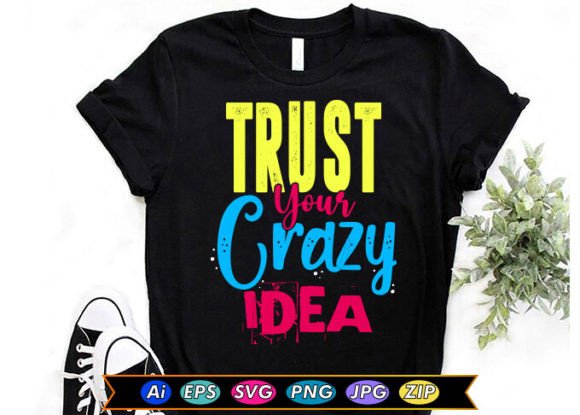
Trust Your Crazy Idea: A Designer's Take on Embroidered Inspiration
When a design file lands in my inbox, my first thought isn't just about the digital image. I’m picturing it stitched out, on a real surface, under real light, destined for a real person. So when I look at the Trust Your Crazy Idea design, I’m immediately evaluating it from that same practical perspective. This isn’t just a graphic; it’s a future embroidery project waiting for its fabric home.
The Immediate Mood and Visual Personality
The phrase itself carries a specific energy—it’s encouraging, a bit rebellious, and deeply personal. The layout and typography, which I can assess from the provided editable vector files, suggest a clean, modern, and slightly whimsical feel. It’s not overly ornate, which is a significant plus for embroidery. The mood it creates is one of empowerment and creative confidence. This tells me it wouldn’t belong on a formal corporate polo, but it would shine on a personal gift, a boutique product, or merchandise for a community-focused small business. Its visual personality leans friendly and contemporary.
The Perfect Project Partners for This Design
In my mind, I’m already running through scenarios. I’m thinking of a custom embroidered tote bag for a creative workshop attendee. The design’s size and likely stitch area would center nicely on a bag panel. I’m also picturing it on the left chest of a cozy sweatshirt—a perfect statement piece for a maker or entrepreneur. For a craft business owner, this could become a signature item on aprons or tea towels in a studio shop.
It feels particularly suited for personalized gifts. Imagine it on a pillow cover for a graduating designer, or subtly stitched onto a baby blanket for a new parent who’s starting a creative venture. As an Etsy seller, I know that products with this kind of aspirational, authentic messaging often resonate deeply. It could elevate a simple custom apparel item into a meaningful gift.
Where Caution and Consideration Come Into Play
Not every design fits every fabric. With its likely text-based composition (given the name), I’d be thinking carefully about small hoop sizes. On a curved surface like a cap, the lettering would need to be adapted carefully to avoid distortion—the editable files are crucial here. On thin or highly stretchy fabric like a lightweight t-shirt, stitch density and the use of proper stabilizer would be paramount to prevent puckering, especially if the design has any dense fill stitch areas.
For dark fabric, thread color contrast is everything. I’d test this in a black and white mockup first to ensure the message remains clear. The design’s success hinges on its readability after stitching. Small details, like tiny serifs in the lettering, might need simplification for very small-scale embroidery or on textured fabrics like fleece.
The Real-World Impact on Your Work and Customer
What does this design do for your finished product? It adds a layer of narrative. An embroidered sweatshirt with “Trust Your Crazy Idea” isn’t just apparel; it’s a conversation starter and a piece of encouragement. This directly affects visual appeal and perceived value. For a customer, it feels more thoughtful and handmade, which builds customer trust and engagement.
For a small shop product, it can reinforce brand consistency if your brand itself is about creativity and courage. The giftability factor is high. It also carries a sense of professionalism—the clean design suggests care, not clutter. In a marketplace like a craft fair, such a item stands out because it speaks directly to the hearts of many fellow makers and dreamers.
A Few Essential Notes From the Embroidery Machine
Before you commit to a final project, always test on scrap fabric first. Use the same material you intend for the final product. This reveals everything about thread colors, actual stitch clarity, and any needed adjustments to the embroidery file. Given you receive multiple formats like SVG and AI, you have the flexibility to resize and tweak elements, but always confirm the final hoop size requirement with your machine.
I strongly advise checking whether the design works seamlessly on both light and dark backgrounds by preparing two test stitches. And this is a universal rule: always confirm the licensing terms for any design before using it in commercial embroidery projects or selling the finished items. The provided file formats are excellent for both personal and commercial use, but the specific license is something you must verify independently.
The Final Stitch: Where This Idea Finds Its Home
Trust Your Crazy Idea is more than a T-shirt design or a graphic asset. In the hands of an embroiderer, it becomes a tangible piece of motivation. Its best home is on projects meant to inspire—tote bags for creators, cozywear for thinkers, personalized gifts for those starting a journey, or merchandise for businesses that celebrate innovation.
It asks for a bit of planning regarding fabric choice and scale, but the payoff in terms of customer reaction and product warmth is significant. As a designer reviewing it for real use, I see its potential not just in the digital preview, but in the texture of the threads and the smile of the person who receives it. That’s the real test of any embroidery design, and this one seems ready to pass it.